Healthy Kids’ Teeth Without Bans: How to Support Good Mealtime Habits


Healthy Kids’ Teeth Without Bans: How to Support Good Mealtime Habits
Caring for children’s teeth isn’t just about brushing and dental checkups. It’s also about the everyday habits that shape how kids eat and drink. Many parents struggle to find the right balance between protecting their child’s teeth and keeping mealtimes positive. The good news is that you can support healthy dental habits without turning food into a battleground or relying on strict bans.
Good Habits Start at the Table
What and how often children eat both affect their teeth. Every time we eat, acids form in the mouth that can weaken tooth enamel. That means it’s not only the amount of sugar that matters, but also how often kids snack.
A simple rule of thumb is to group meals and snacks together, giving the mouth time to recover between eating. Three main meals and one or two snacks a day are usually enough. This structure helps saliva do its job—neutralizing acids and protecting enamel.
It’s not about forbidding snacks but about creating a rhythm. When kids know when to expect food, they’re less likely to graze all day—and their teeth get a chance to rest.
Make Water the Go-To Drink
Sugary drinks are one of the biggest culprits behind cavities. Even drinks that seem healthy, like juice or flavored milk, contain sugar and acids that can harm enamel.
The best thing you can do is make water the default choice. Keep a water bottle handy, and drink water with your child. Kids learn most from what they see, not just what they’re told.
If your child has juice or a sweet drink, serve it with a meal rather than between meals. Food helps neutralize acids, reducing the impact on teeth.
Keep Mealtimes Positive
Strict rules and bans can backfire, making kids more interested in the foods they’re told to avoid. Instead of focusing on what not to eat, highlight the foods that help teeth stay strong—like milk, cheese, vegetables, and whole grains.
Turn healthy eating into something fun. Let your child help pick out fruits and veggies at the store or decorate their own lunch plate. When kids feel involved, they’re more likely to build habits that last.
A positive approach also helps children see dental care as part of feeling good, not as a set of restrictions.
Brushing as a Natural Routine
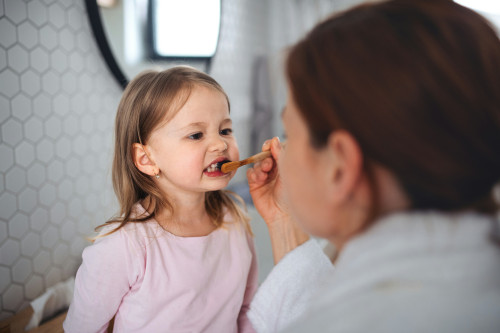
While mealtime habits matter, brushing remains the foundation of good dental health. Children under 10 still need help or supervision to make sure their teeth are cleaned properly.
Make brushing a pleasant part of the day rather than a chore. Play a favorite song, use a timer, or brush together. The key is consistency—morning and night, every day—so it becomes second nature.
Fluoride toothpaste is essential for strengthening enamel. Use a small smear for toddlers and a pea-sized amount for older kids.
Sweet Treats Have Their Place
Candy, cookies, and ice cream are part of childhood—and they don’t have to be off-limits. What matters most is how and when they’re eaten.
It’s better to enjoy sweets occasionally, all at once, rather than nibbling on them throughout the day. That way, teeth face fewer acid attacks. Serve treats with a meal and encourage your child to drink water afterward.
Having set “treat times” helps kids understand that sweets are special, not something to sneak between meals.
Læs også:


Building Habits That Last
Healthy teeth aren’t about perfection—they’re about balance. When parents show that good food and dental care can go hand in hand, kids learn to take care of their own health naturally.
Small steps—like choosing water, keeping regular mealtimes, and brushing together—make a big difference over time. The goal isn’t to make dental care a burden, but to make it a normal, caring part of everyday life.
Læs også: